Course Summary
EDU 603 introduced the foundations and practice of qualitative inquiry through an integrated process of research design and fieldwork. The course addressed the development of interpretive research questions, conceptual frameworks, researcher subjectivity and positionality, ethical considerations, data collection, qualitative analysis, and research writing. Through participant observation, fieldnotes, interviews, reflective memos, and a pilot study, I gained hands-on experience examining how people make meaning of their experiences while critically considering the researcher’s role in knowledge production.
Selected Artifacts
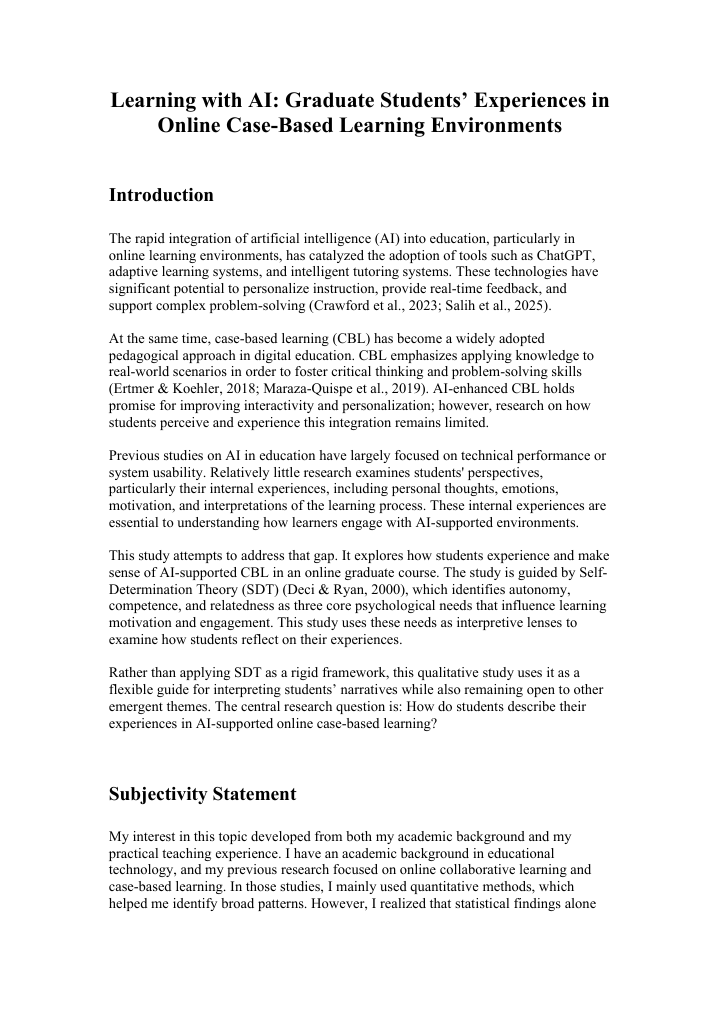
Final Research Proposal: Learning with AI
This final research proposal developed a pilot qualitative study examining graduate students’ experiences in AI-supported online case-based learning. Through semi-structured interviews and preliminary qualitative analysis, the study explored how students interpreted AI’s role in their learning.
Please sign in with your Syracuse University account to view this document.
Field Observation & Reflective Memo
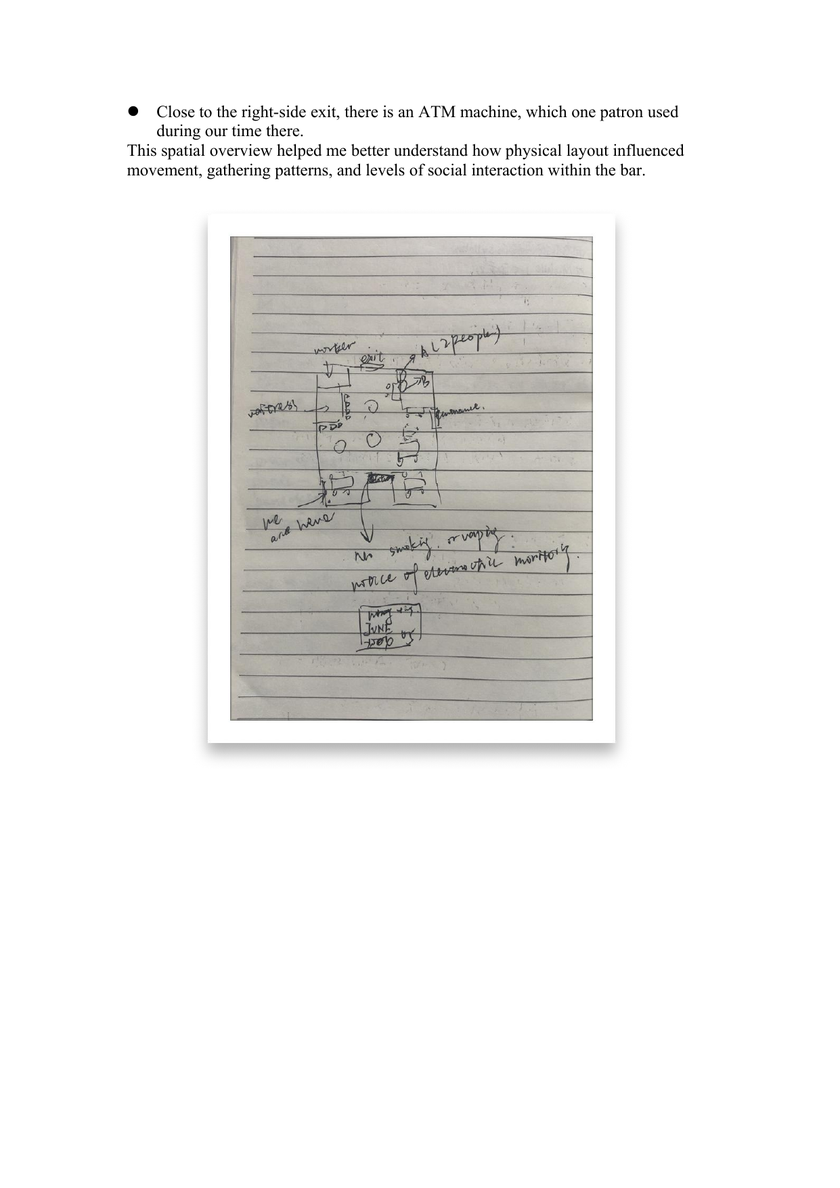
This field observation documented a participant-observation exercise at Orange Crate Brewing. The assignment included detailed narrative fieldnotes, a spatial sketch of the observation site, and a reflective memo examining social interaction, nonverbal behavior, researcher visibility, positionality, and the influence of the observer on the research setting.
Please sign in with your Syracuse University account to view this document.
Reflection
Before EDU 603, much of my recent research experience had been quantitative. I had studied qualitative research before, but this course gave me the opportunity to work with qualitative methods more closely in practice. Through observation, interviewing, memo writing, and qualitative analysis, I began to pay closer attention to how people describe and make sense of their experiences. I also became more aware of my own role as a researcher. What I notice, what I ask, and how I interpret participants’ responses can shape the research process.
I had observed online courses before, but EDU 603 was my first experience conducting field observation in a physical setting. I began to notice gestures, use of space, interactions with the environment, and moments of silence. I also conducted my first interview that lasted more than an hour. I learned to listen carefully, ask follow-up questions based on participants’ responses, and let the conversation develop naturally.
I also used this course to conduct a pilot study on graduate students’ experiences in AI-supported online case-based learning. The interviews and preliminary analysis helped me identify issues related to control, confidence, engagement, human interaction, and students’ judgments about AI use. Some of these ideas continued into my later research. The pilot study also gave me an opportunity to test my interview approach and identify questions that I wanted to explore more deeply.