Course Summary
IDE 631 introduced the foundations of instructional design through the systematic analysis and design of instruction. The course examined instructional design as a professional discipline and a structured process, with emphasis on needs and performance analysis, learner and environmental analysis, instructional objectives, assessment, instructional strategies, sequencing, media selection, implementation, and evaluation. Through individual activities and a semester-long collaborative design project, I applied these concepts to develop an instructional solution for a human performance problem.
Selected Artifacts
Kahoot Training: Final Instructional Design Report
This collaborative final project presents a six-hour professional training program designed to help middle school teachers integrate Kahoot into classroom instruction. Beginning with an identified performance gap, our team developed an instructional solution that connected audience and context analysis with learning objectives, assessments, instructional strategies, storyboards, implementation planning, and formative and summative evaluation. My primary contributions focused on the analysis, design, and implementation components of the project.
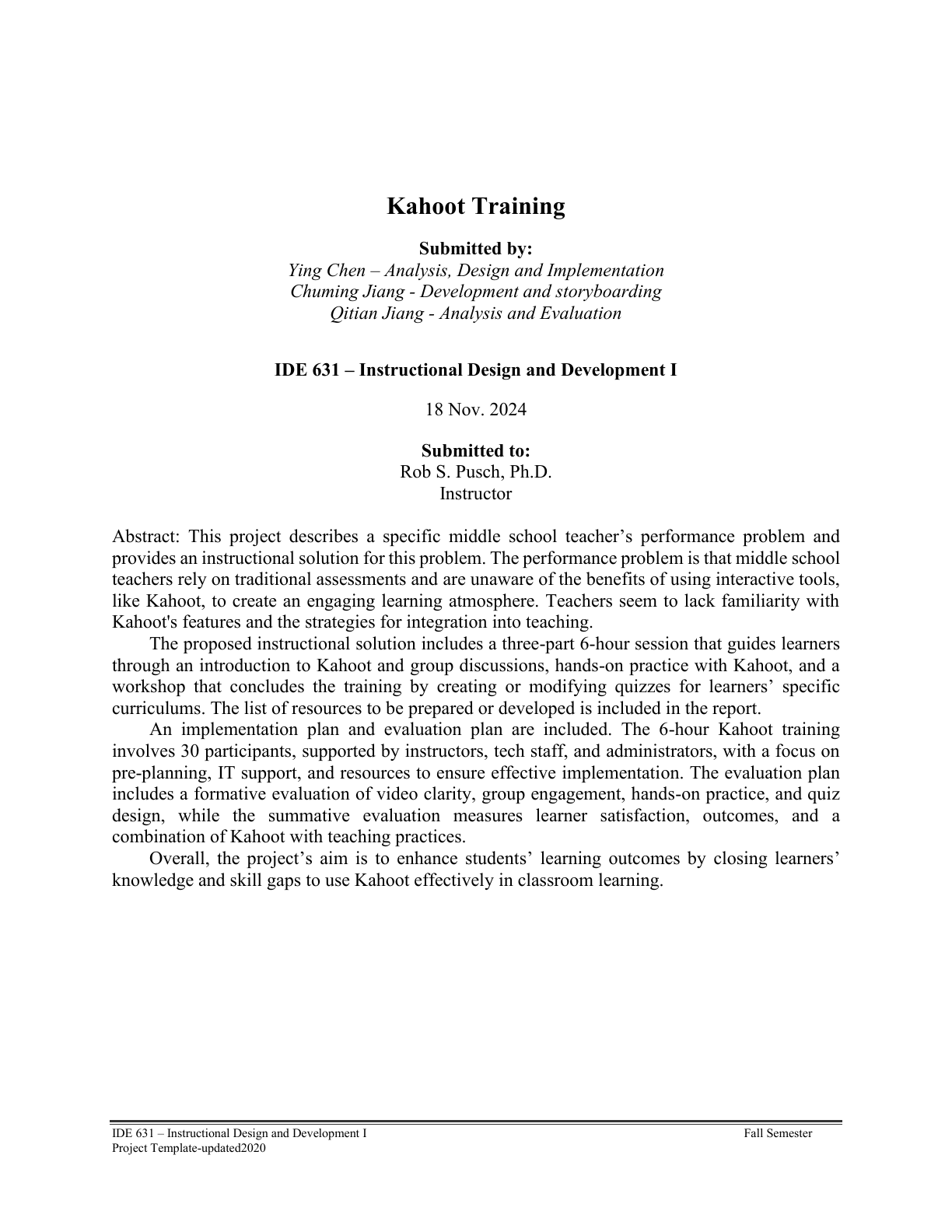
Please sign in with your Syracuse University account to view this document.
Reflection
I had studied instructional design before entering the doctoral program, so many of the concepts in IDE 631 were already familiar to me. What I appreciated about this course was the opportunity to return to the instructional design process through a complete project and think more carefully about how the different parts of a design fit together. In our Kahoot training project, we began with the performance problem and considered the learners and instructional environment before developing objectives, assessments, instructional strategies, and an implementation plan. Working through the project helped me pay more attention to the connections among these decisions and to whether they remained consistent as the design developed.
I also became more conscious of the reasoning behind the choices we made. It was not enough to decide that an activity or technology would be useful; we needed to consider why it made sense for the particular learners, problem, and setting. I have found myself returning to this way of thinking in later coursework and instructional development work. When I make a design decision now, I try to look first at the problem and context, consider the evidence available to me, and then decide what approach makes sense.